
Picture a simple scenario. Tomorrow your customer won’t come through a browser, but through an AI agent. They’ll ask it to order groceries, book a table, find a ticket, or buy a product in the right size. Will that agent be able to pay on their behalf?
This is no longer just a storyline for future-tech slide decks. People are gradually handing routine tasks over to agents, while businesses see automated traffic in their logs instead of a real person. Often, it looks suspicious.
And that’s where things get interesting. For years, bot protection has helped websites push back against spam, scraping, and fraud. Now the very same protection can keep out a real buyer. The only difference is that the buyer is acting not with their own hands, but through an AI assistant.
The buyer is ready, but the captcha says otherwise
As TechCrunch AI reports, personal agents such as Meta Muse, Instinct, ChatGPT Dots, and others are gradually moving beyond chat replies and into action. They can try to book a flight, place an order, or schedule a service appointment. The problem is that websites aren’t always ready to work with them.
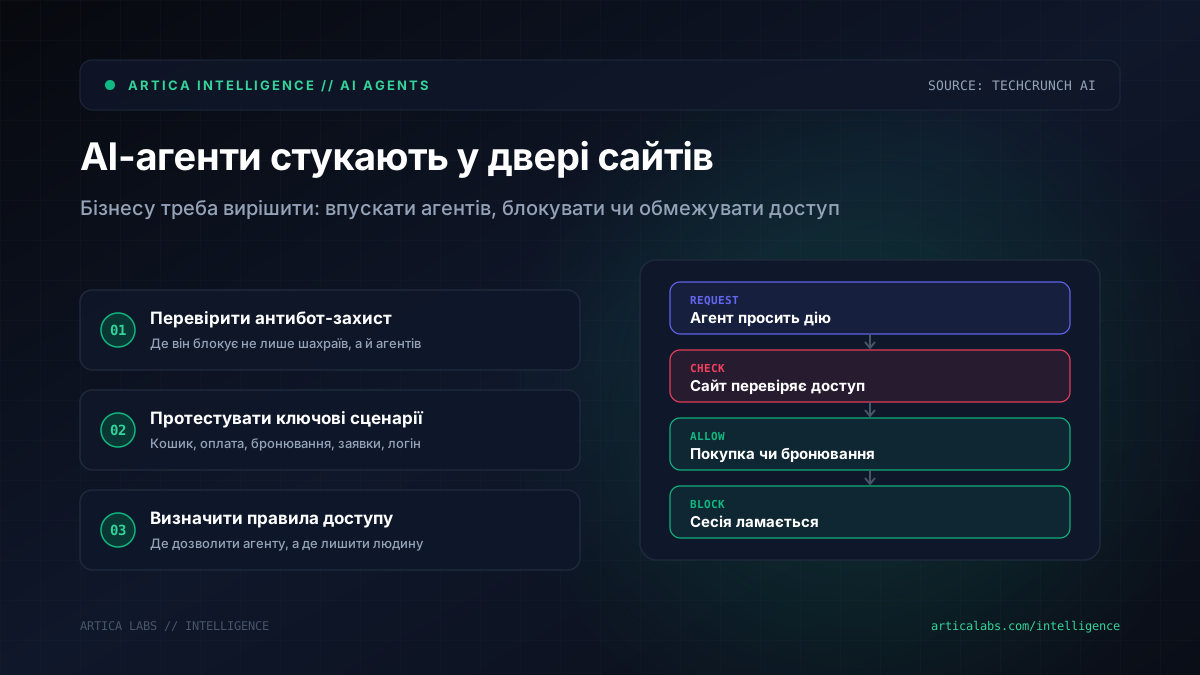
According to TechCrunch AI, Amazon started blocking Meta Muse on its retail site. As a result, the agent could no longer browse the catalog or buy products. But blocking is not always intentional. Walmart, for example, is working with Muse and wants to be available in these AI scenarios. Still, users have run into problems because of human-verification checks. The agent can’t pass that step, the session breaks, and the purchase falls through. Formally, the business didn’t turn anyone away. But it didn’t get the money either.
There is similar friction in aviation and booking services. Delta said it does not yet have an integration that would let a third-party AI agent search for or book flights on behalf of a customer on its platforms. The company evaluates such technologies from the standpoint of security and user experience. United pointed to rules that prohibit bots and automated devices without written permission. Yelp allows non-human traffic only through its data-licensing program. eBay says it does not block all shopping agents, but it does restrict unauthorized actions, including scraping and model training.
At the same time, Meta, Walmart, Stripe, Sierra, Genesys, Rocket, NiCE, and Decagon are working on an open standard for how AI agents communicate with businesses in online commerce. The logic is clear: businesses need to distinguish an assistant acting on a customer’s behalf from a bot that steals data or attacks a site.
It’s time for businesses to check the cart and the signup form, not just the future
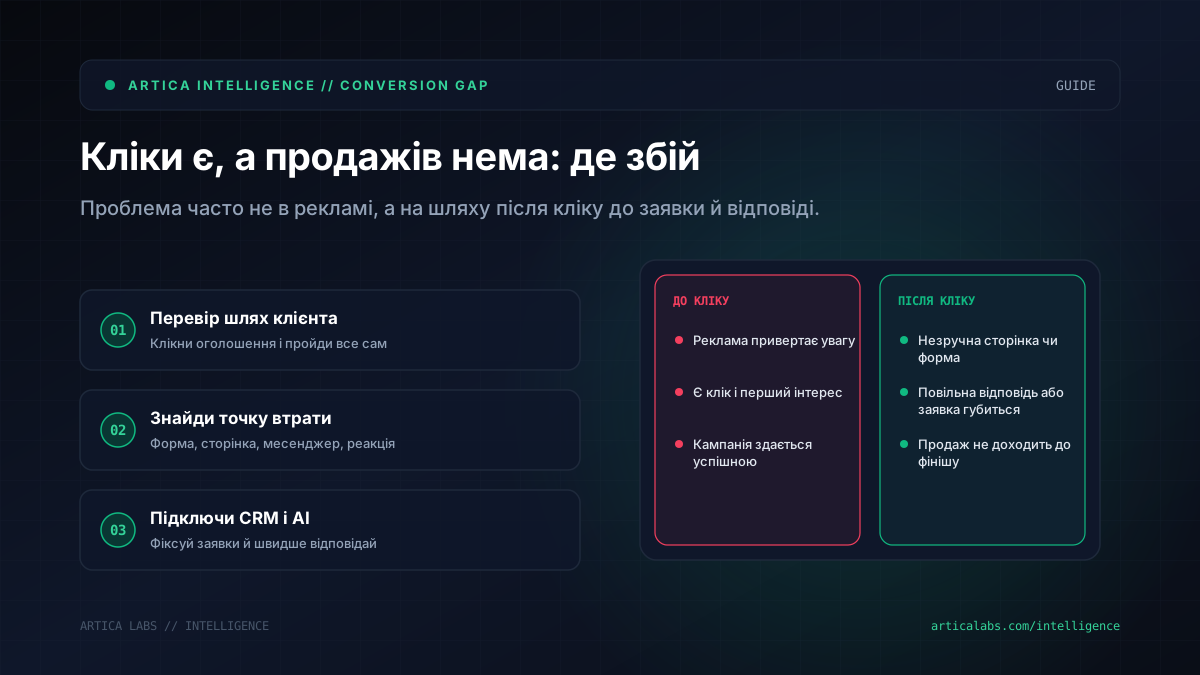
For an online store, this is a very down-to-earth sales issue. Say a customer asks an agent to find sneakers in the right size and buy the cheapest option with delivery. If your site gets stuck on a captcha or breaks the session, the agent will move on. Maybe to a competitor where everything goes through more smoothly.
For a clinic, it may be appointment booking. For an agency, delivery service, or SaaS company, it may be creating a request, taking payment, changing a plan, or contacting support. In other words, this is not some abstract “AI trend,” but concrete points where a customer either gets to the action or drops out.
You can start without a major project. We’d recommend going through a few things:
- see which anti-bot systems are installed on the site and where they may be blocking not only fraudsters, but also useful automation;
- test critical flows: product search, cart, checkout, booking, application form, login;
- separate the risks: where an agent can be given controlled access, and where a human needs to act manually;
- keep an eye on standards and partner integrations, especially if your business depends on online transactions.
There is also a less pleasant side. Open doors for AI agents can become open doors for abuse. So this is not about turning off protection and celebrating a new sales channel. What’s needed is a new layer of rules: agent authorization, user-consent confirmation, action limits, and transparent logs.
The worst thing right now is pretending agents don’t exist. It’s better to calmly test how your site behaves with automated assistants and decide where they can bring in revenue — and where they still need to wait outside.