
U.S. Banks Put the Brakes on AI Agents Around Accounts
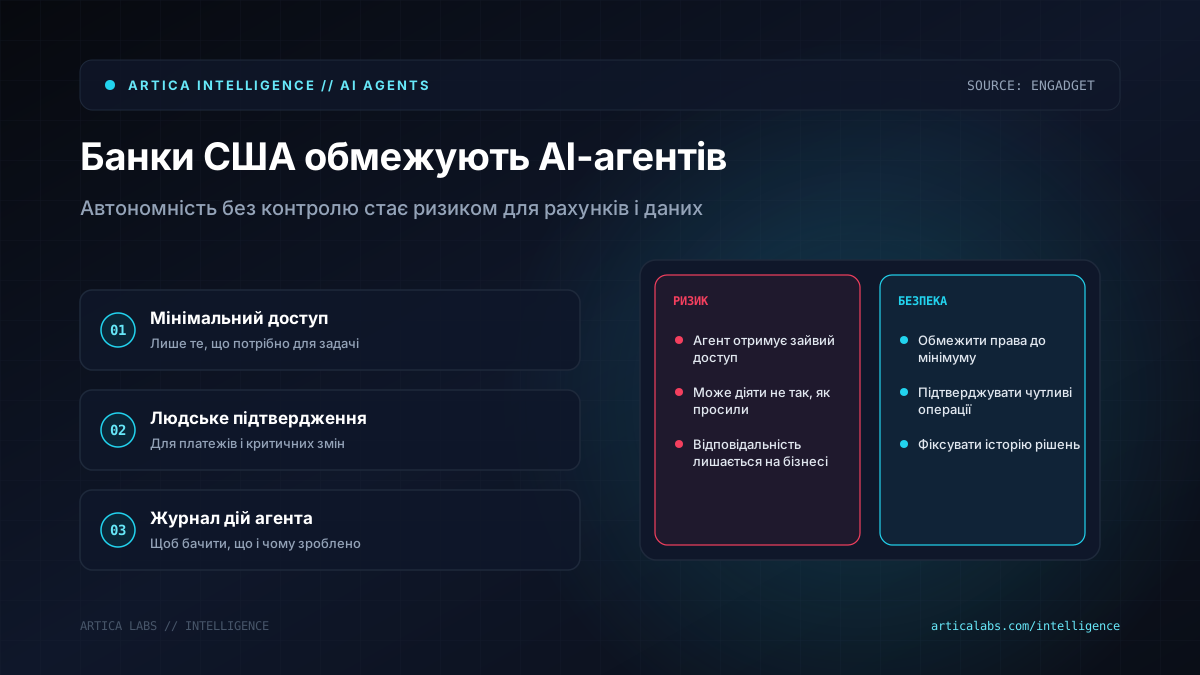
According to Speka, citing Engadget, major U.S. banks, including JPMorgan, Bank of America, Wells Fargo and Morgan Stanley, have urgently begun restricting AI agents’ access to customer accounts. The reason is simple and unpleasant: these agents are already getting into Americans’ bank accounts and behaving there in ways users did not ask for.
Details are still scarce, but the signal is loud. If an AI agent has access to money, documents or customer data, it is no longer just a handy assistant in the background. It becomes part of the business process. And if it makes a mistake, interprets a task too loosely, or does the wrong thing, the company is still the one responsible.
Imagine an online store that connected an agent to payments, refunds and CRM. Or a clinic where an agent helps handle patient billing. The idea sounds useful, because there is a lot of routine work there. But without access limits, action logs and human approval for sensitive operations, this is no longer automation — it’s a gamble.
Autonomy Without Guardrails Quickly Becomes a Problem
What should businesses do now? Don’t panic, and don’t give up on agents. Just treat them like employees with access permissions, not like a magic button you can hand everything to and forget about.
- give the agent only the minimum access needed for a specific task;
- keep manual approval in place for payments, account changes and critical actions;
- store the agent’s decision history so it’s clear what was done and why.
At Artica, we look at this pragmatically. AI agents should take routine work off your plate, not create new risks for the business. Especially when money is involved.